
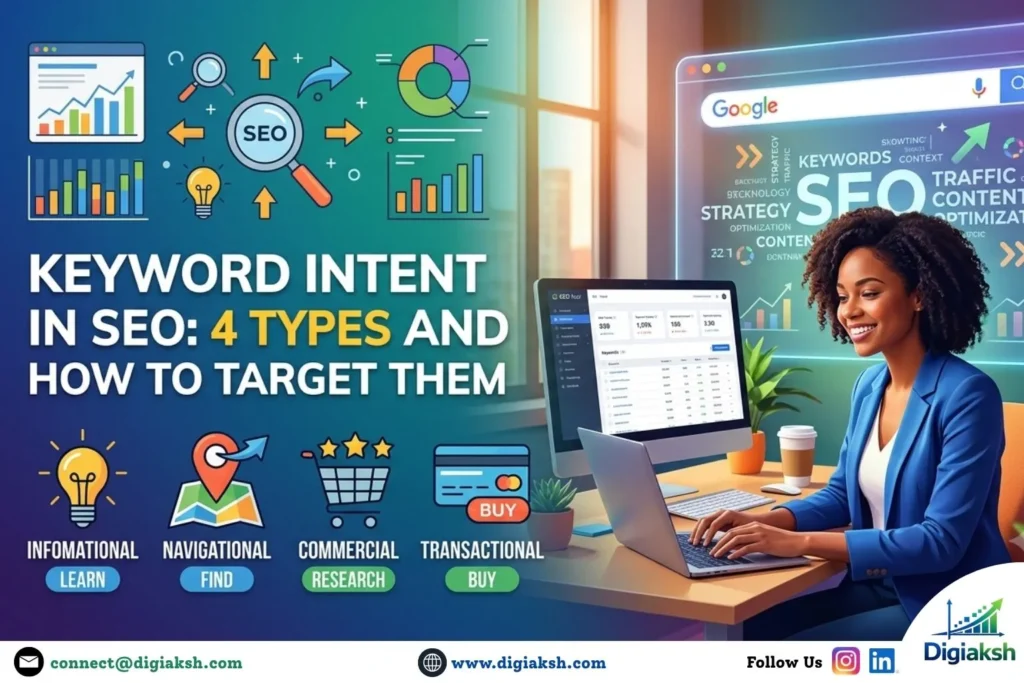
Keyword Intent in SEO refers to the reason behind a user’s search query. When someone types a phrase into Google, they usually have a specific goal in mind—finding information, visiting a particular website, comparing options, or making a purchase. Understanding this goal helps SEO professionals create content that matches what users actually want to find.
Many businesses focus heavily on search volume when selecting keywords. However, a keyword with high search volume may not always bring relevant traffic or conversions. By understanding what is keyword intent and aligning content with the user’s goal, businesses can build a more effective SEO and content strategy.
What Is Keyword Intent?
Keyword intent is the purpose behind a user’s search. It helps search engines understand what type of information or result would be most useful for a particular query.
For example, someone searching for “how to improve website speed” is probably looking for information, while someone searching for “SEO services in Mumbai“ may be looking for a service provider.
This is why keyword search intent is an important part of keyword research. Instead of simply targeting keywords with high search volume, SEO professionals can prioritize keywords based on relevance, business goals, and the user’s stage in the buying journey.
Types of Keyword Intent in SEO
There are four commonly used keyword intent types: informational, navigational, commercial, and transactional. Each represents a different user goal and requires a different content approach.
Informational Intent
Informational intent means the user is looking for information or an answer to a question. They are usually researching a topic rather than immediately trying to purchase something.
Examples:
- How to remove wine stains from clothes
- What vaccinations does a puppy need?
- How long does it take to renovate a kitchen?
- Best time to visit Goa
For these searches, blog posts, guides, tutorials, FAQs, and educational resources can work well.
For example, a user searching “how to improve local SEO” may be interested in a detailed guide explaining Google Business Profile optimization, local citations, reviews, and local content.
Navigational Intent
Navigational intent occurs when users are trying to find a specific website, business, brand, or webpage.
Examples:
- MakeMyTrip
- Taj Hotels
- IKEA Mumbai
- HDFC Bank net banking
- Pizza Hut
The user generally knows what they are looking for and wants to reach a particular destination.
For businesses, branded pages and well-optimized website structures can help users find the right page quickly. Maintaining accurate brand information across search results can also support navigational searches.
Commercial Intent
Commercial intent indicates that a user is researching products, services, or solutions before making a potential purchase. They may be comparing different options and evaluating which one suits their needs.
Examples:
- Best family resorts in Goa
- Best washing machine under ₹40,000
- Top restaurants for a birthday party
- Best dental clinics for braces
- Best LLM SEO Agency in Mumbai
- iPhone vs Samsung
Commercial searches are valuable because the user is closer to making a decision than someone conducting general research.
Comparison pages, service guides, case studies, reviews, and detailed buying guides can be suitable content formats for these searches.
Transactional Intent
Transactional intent means the user is ready to take an action, such as purchasing a product, booking a service, requesting a quote, or signing up.
Examples:
- Book a hotel in Goa
- Buy Nike running shoes online
- Book a dentist appointment near me
- Order birthday cake online
- Hire a wedding photographer in Mumbai
- Hire SEO Consultant in Mumbai
For transactional searches, service pages, product pages, landing pages, pricing pages, and contact pages are often more appropriate than general informational blogs.
For example, a business targeting “SEO Freelancer in Mumbai“ should have a dedicated, well-optimized service page that clearly explains its services, experience, process, and how prospects can get in touch.
How to Use an Intent Based Keyword Strategy
Once you understand keyword intent, organize your keywords according to the user’s search goal. An intent based keyword strategy can help you create different content for users at different stages of their journey.
For example:
- Informational: Create educational blog posts.
- Navigational: Optimize branded and important website pages.
- Commercial: Create comparison pages, service guides, and case studies.
- Transactional: Optimize service, product, and conversion-focused pages.
This approach also helps prevent a common SEO mistake: trying to rank every keyword with a blog post. Some keywords are better suited to service pages, category pages, product pages, or landing pages.
Why Keyword Intent Matters for SEO
Understanding Keyword Intent in SEO can help businesses attract more relevant visitors rather than simply increasing traffic. When the content format and information match the user’s expectations, visitors are more likely to engage with the page and move toward the next step.
Keyword intent can also improve content planning. Instead of publishing random articles based on search volume, businesses can build content around different stages of the customer journey.
The key is to look beyond the keyword itself and ask: What does the searcher actually want when they type this query?
Conclusion
Understanding Keyword Intent in SEO is essential for creating content that connects search queries with the right pages. By identifying informational, navigational, commercial, and transactional intent, businesses can build a more focused keyword and content strategy.
If you need help with keyword research, search intent analysis, content strategy, and SEO optimization, Digiaksh Marketing Solutions can help you build an SEO strategy based on your business goals and target audience.
Get in touch with us to discuss your SEO requirements and create an intent-focused strategy for your website.